
Building a child theme and need a screenshot for it? Our child theme generator creates the theme itself, and this page covers the thumbnail that goes with it.
The WordPress theme screenshot is the thumbnail image that represents your theme in two places: the WordPress.org Theme Directory listing, and inside the WordPress admin under Appearance -> Themes. It’s stored as a single file named screenshot.png in the root of the theme folder.
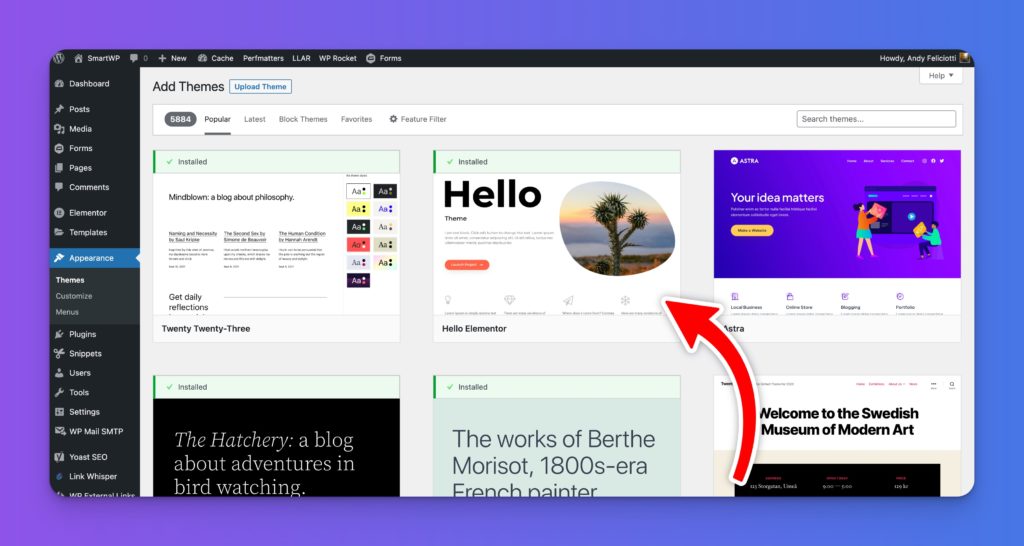
This guide covers the recommended size, format, filename, and how to add or update a screenshot for any WordPress theme (classic or block-based).
WordPress Theme Screenshot Size Summary
The short version of everything below:
- Dimensions: 1200×900 px (WordPress will display it at this size)
- For high-DPI / retina displays: save at 2x = 2400×1800 px
- Aspect ratio: 4:3
- File format: PNG (recommended), JPG accepted
- Filename: screenshot.png in the theme root folder
Recommended WordPress Theme Screenshot Size
The recommended size for a WordPress theme screenshot is 1200 pixels wide by 900 pixels tall at a 4:3 aspect ratio. WordPress will display the screenshot at this size in the theme browser. This is a fixed recommendation, unlike featured image size, which depends entirely on your theme.
For high-DPI (retina) displays, save the file at 2x: 2400×1800 px, still named screenshot.png. WordPress doesn’t generate a separate file, it just serves the higher-resolution source and the browser scales it down on standard displays. Modern themes in the WordPress.org directory all use 2x screenshots. See the WordPress Theme Handbook for the canonical reference.
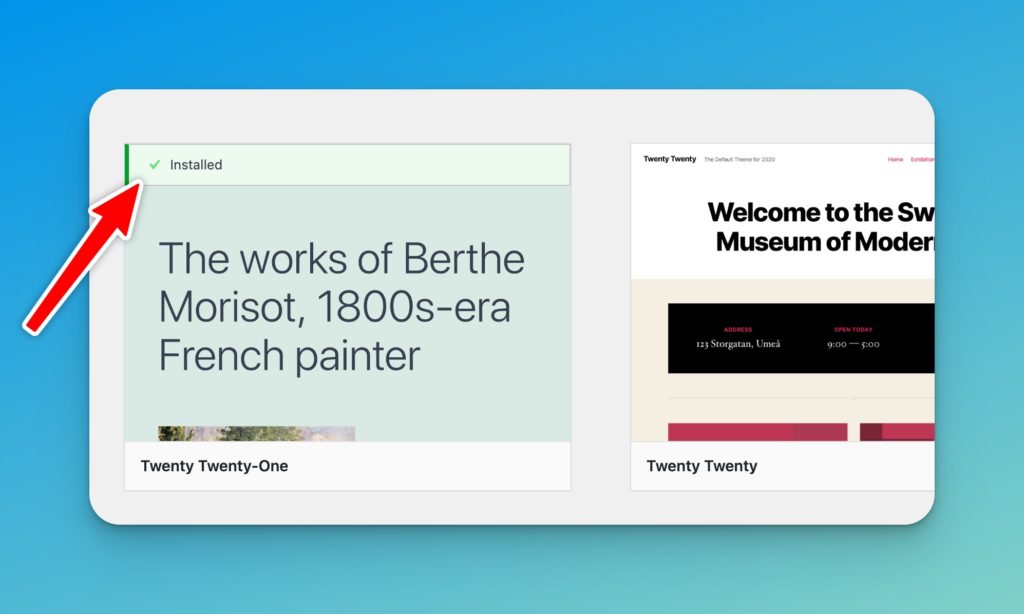
When creating a screenshot for your theme it’s advised to center your main graphics in the image. Part of the WordPress UI may cover edges of the display as seen below.
WordPress Theme Screenshot File format
PNG is the recommended file format for the screenshot. JPG and GIF will technically work but aren’t the documented standard. PNG is what every theme on the WordPress.org directory uses, and it’s the format the WordPress Theme Handbook calls out specifically.
For the actual image, you can either design something custom (most theme authors do, since this is the marketing shot for the theme) or screenshot the theme’s homepage as it renders and crop to 1200×900.
WordPress Theme Screenshot Filename
WordPress theme screenshots are simply called “screenshot.png” of course if you are using a .JPG file it would be screenshot.jpg but using the PNG format is recommended.
How to Add a Screenshot to a WordPress Theme
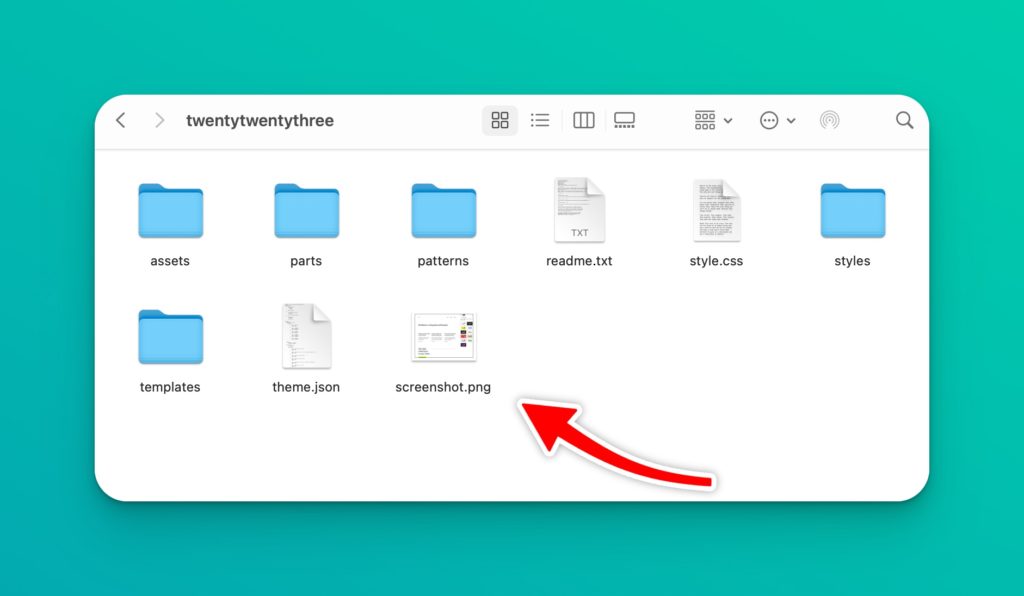
The screenshot lives at the root of the theme folder, alongside the style.css file that defines the theme. The full path looks like this:
wp-content/
  themes/
    your-theme/
      style.css
      screenshot.png   <-- here
      functions.php
      index.php
To replace or add a screenshot for a theme already installed on a site:
- Create the screenshot at 1200×900 (or 2400×1800 for retina) and save as
screenshot.png. - Connect to your site via SFTP, SSH, or your WordPress host’s file manager.
- Navigate to
/wp-content/themes/your-theme-folder/. - Upload the new
screenshot.png, overwriting the existing file if there is one. - Reload Appearance -> Themes in the WordPress admin. The new screenshot should appear immediately (clear your browser cache if it doesn’t).
This is especially helpful when you are creating a child theme in WordPress.
Why Are WordPress Theme Screenshots Important?
The screenshot is the first image visitors see when browsing the WordPress.org theme directory, and it’s how site owners visually identify which theme is which inside their dashboard. For a theme you intend to publish on WordPress.org, the screenshot is essentially the marketing shot, since it determines whether anyone clicks through to read the description.
For a private or child theme you’re only using on your own site, the screenshot has less practical impact, but it still makes the WordPress admin a little easier to scan when you have multiple themes installed.
Frequently Asked Questions
Why isn’t my screenshot showing in the WordPress admin?
Three common causes: (1) wrong filename, must be exactly screenshot.png (case-sensitive on Linux servers), (2) wrong location, must be in the root of the theme folder not a subdirectory, (3) browser cache, hard-refresh the WordPress admin page or open it in a private window.
Do block themes (Full Site Editing themes) use the same screenshot setup?
Yes. Block themes introduced in WordPress 5.9+ use the same screenshot.png file in the same location, with the same dimensions and format. Nothing changed for screenshots when block themes shipped.
Does WordPress generate multiple sizes from screenshot.png?
No. Unlike featured images for posts, WordPress doesn’t run the theme screenshot through its image-resizing pipeline. The single file you upload is what gets served, scaled by the browser to fit the theme browser tile. That’s why a 2x screenshot (2400×1800) is the documented best practice, one file covers both standard and retina displays.
Will WordPress reject my theme from the directory if the screenshot is the wrong size?
The Theme Review Team will flag screenshots that significantly deviate from the 4:3 ratio or are missing entirely. They generally accept slight variations as long as the file is named correctly and is reasonably close to 1200×900. Themes without any screenshot.png are typically rejected.
Wrapping Up
The summary if you skipped to the end: 1200×900 PNG named screenshot.png in the root of the theme folder. Use 2400×1800 (2x) if you want it to look sharp on retina displays. Drop it in via SFTP, refresh the admin, done.





5 Responses
“I found the tip about centering the main graphics in the screenshot to be very helpful. This will help to ensure that the most important elements of the theme are visible when the screenshot is displayed at smaller sizes.”
After having many child themes without a site screenshot – I finally decided to cover this to add a bit more professional touch. Great explanation Andy, glad I’ve stumbled upon this article.
Keep it up ^^
nice work
I am Jaseem a seasoned freelance digital marketing strategist in Calicut known for crafting engaging content marketing, web design,seo,smm.
This is very helpful.