WordPress 7.1 has no built-in Duplicate button for posts and pages, so you have two good options: copy the content with the editor’s Copy all blocks command and paste it into a new page, or install the free Yoast Duplicate Post plugin, which adds a one-click Clone link to every post and page. The first copies only the content. The plugin also carries over the featured image, categories, tags and custom fields, including your SEO settings.
Below are both methods with screenshots from WordPress 7.1, the duplicate options WordPress does include for patterns and WooCommerce products, and how to publish a copy without creating duplicate content.
- WordPress 7.1 has no one-click Duplicate option for posts or pages. The block editor contains one, but core switches it off unless you run the Gutenberg plugin.
- Without a plugin, open the page, choose Options > Copy all blocks, and paste into a new page. That copies the content only.
- The free Yoast Duplicate Post plugin adds Clone, New Draft and Rewrite & Republish links that also copy the featured image, categories, tags and custom fields.
- Copies start as drafts with no slug, so nothing goes live until you publish. Change the title and content first to avoid near-identical pages.
- Patterns, block theme template parts and WooCommerce products already have their own Duplicate options.
Does WordPress have a built-in duplicate option?
Not for posts and pages. The block editor’s code does include a Duplicate action that makes a draft copy titled “(Copy)”, but WordPress core switches it off for posts and pages. It only appears if you install the Gutenberg plugin, where new editor features are tested before they reach core. We checked this in the WordPress 7.1 source, so if you have seen a Duplicate option in someone else’s screenshots, that is where it came from.
WordPress and popular plugins do offer one-click duplicates in a few other places:
- Patterns have a Duplicate action on the Patterns screen, under Appearance > Patterns.
- Block theme template parts, like headers and footers, can be duplicated in the Site Editor.
- WooCommerce products have a Duplicate link in the product list and a Copy to a new draft link on the edit screen.
Method 1: Copy all blocks into a new page
This takes a minute and needs no plugin, which makes it right for the occasional copy.
- Open the page or post you want to copy in the block editor.
- Click the Options button (the three dots in the top right corner) and choose Copy all blocks under Tools. WordPress confirms with an “All content copied.” notice.
- Create a new page under Pages > Add Page, or a new post under Posts > Add Post.
- Click into the empty editor and paste with Ctrl+V (Cmd+V on a Mac).
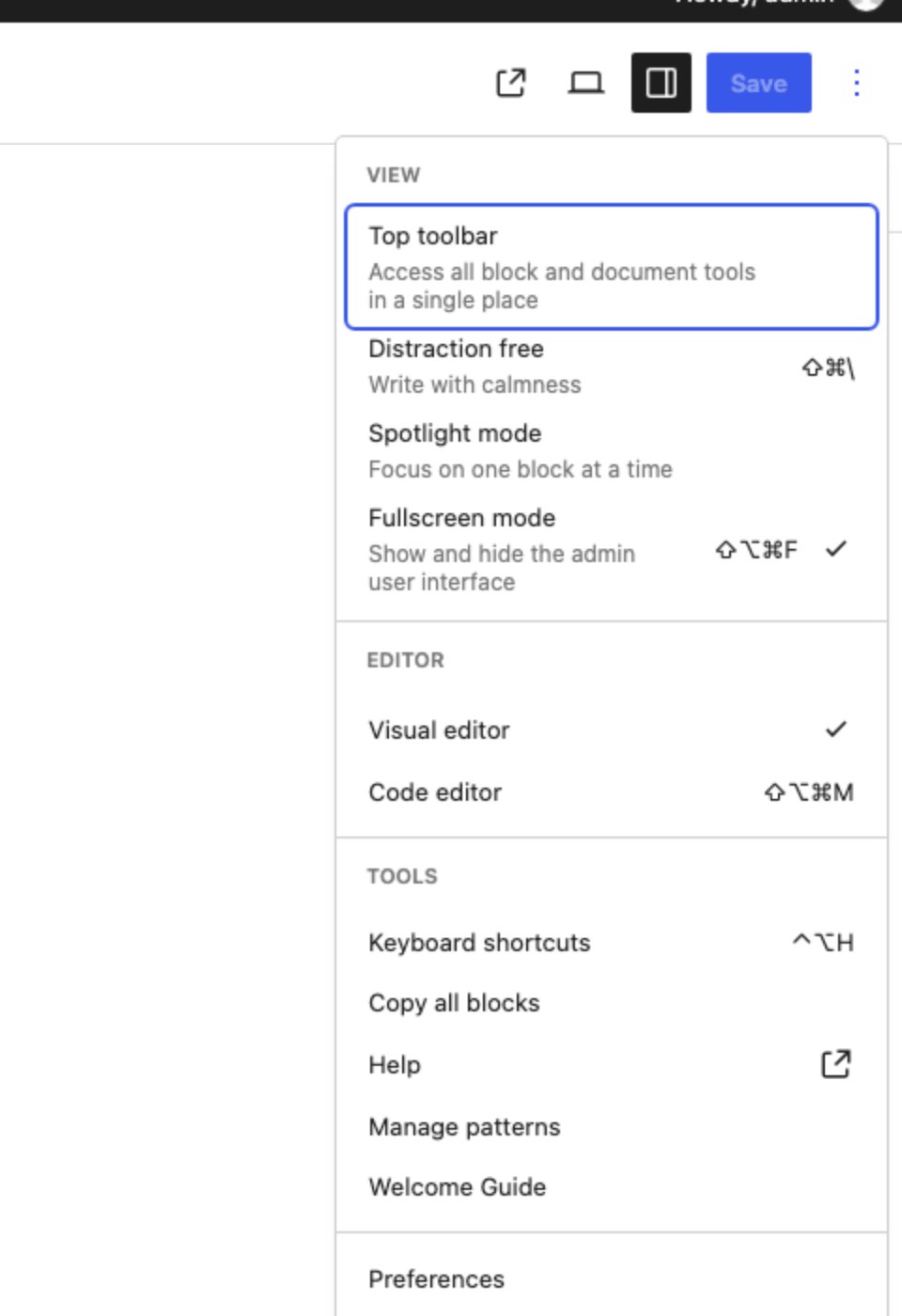
This copies the content and nothing else. You still need to add the title, featured image, categories and tags, page template and SEO settings to the new page by hand, which is why a plugin is worth it if you duplicate pages often.
Two alternatives do the same job. You can click into the editor, press Ctrl+A twice to select every block, and copy. Or switch to the Code editor from the same Options menu and copy the raw block markup, which is handy for moving a page between two different WordPress sites.
Method 2: Duplicate with the Yoast Duplicate Post plugin
Yoast Duplicate Post is free, has 3+ million active installs, and is tested with WordPress 7.1. Install it from Plugins > Add Plugin by searching for “Duplicate Post”, then activate it.

Once it is active, hover over any post or page in your Posts or Pages list and you will see new links:
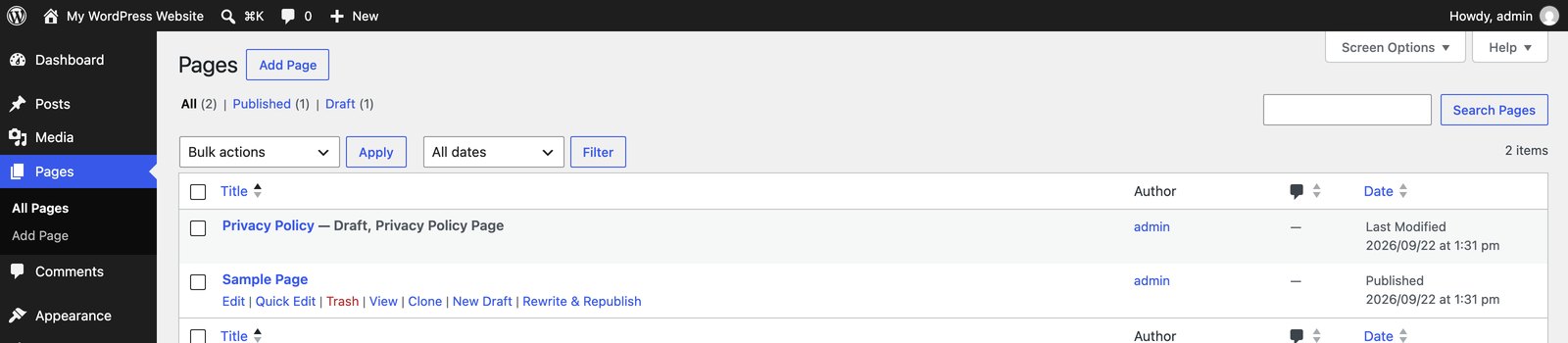
- Clone makes a draft copy and leaves you on the list, which is useful when you need several copies at once.
- New Draft makes the copy and opens it in the editor straight away. This is the one to use most of the time.
- Rewrite & Republish makes an editable copy of a published page. When you republish it, the changes are merged back into the original, so the page keeps its URL. It only appears on published posts and pages, which is why the draft Privacy Policy page above does not show it.
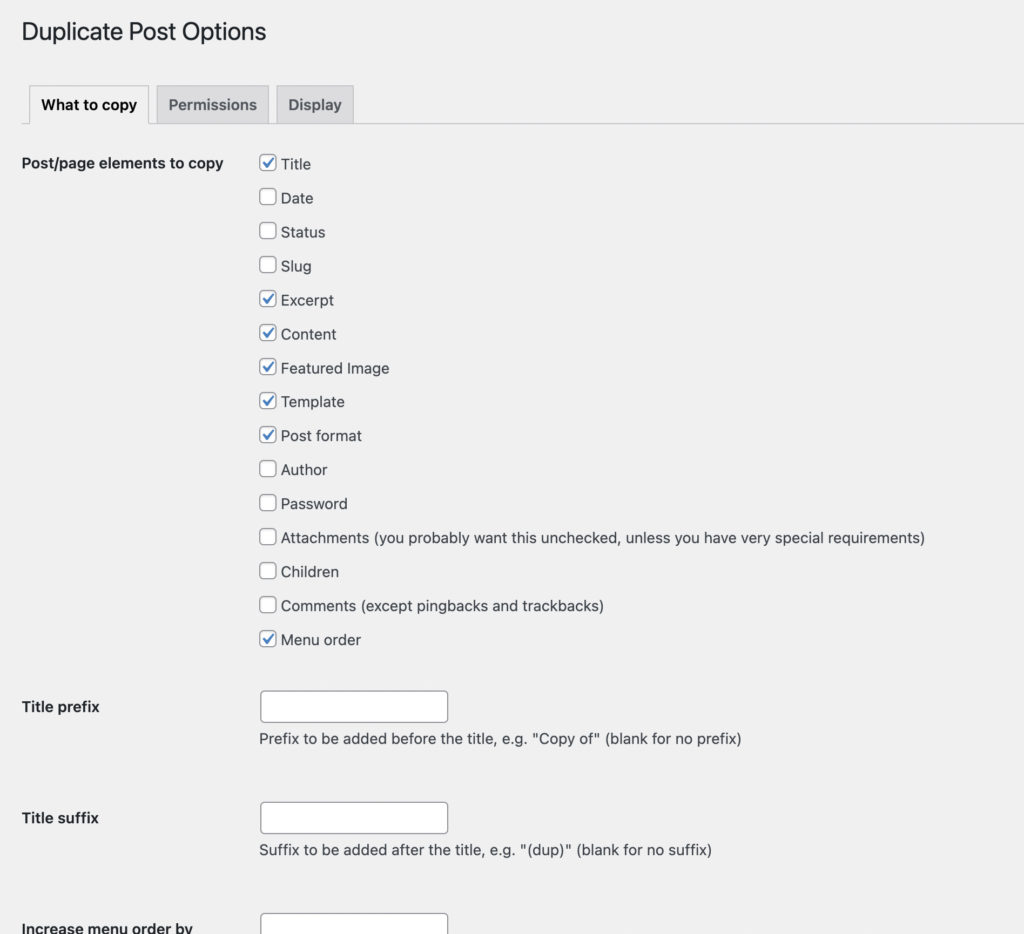
Out of the box, Duplicate Post copies the content, excerpt, featured image, template, every category and tag, and all custom fields, which is where plugins like Yoast SEO store your SEO title and description. It does not copy the status or the slug, so each copy starts as a draft and gets its own address when you publish.
To change that, go to Settings > Duplicate Post. It has three tabs: What to copy, Permissions, and Display. What to copy controls exactly which parts come across and lets you add a title prefix such as “Copy of”:
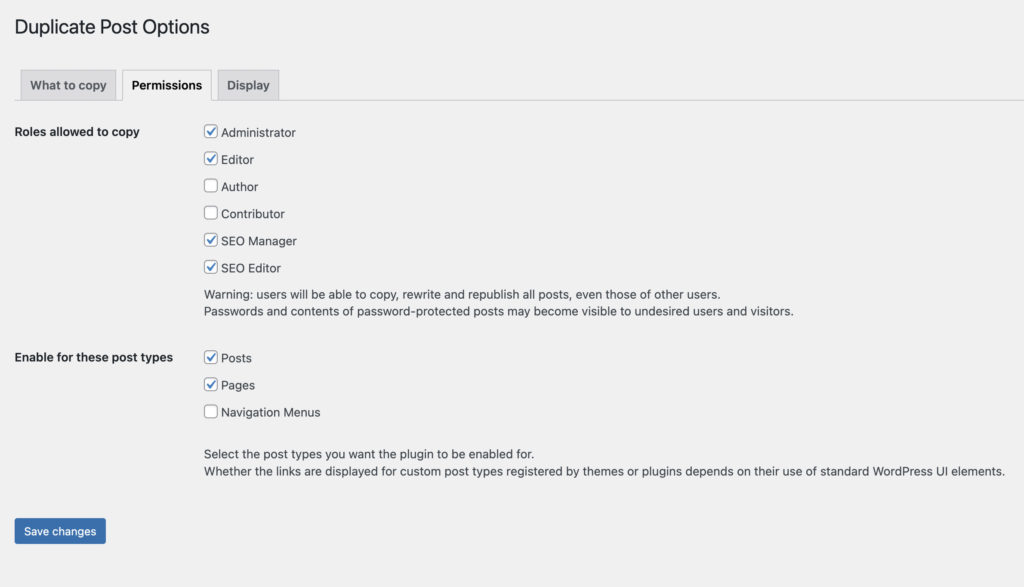
Permissions controls which user roles can duplicate content and which post types get the links. Posts and pages are enabled by default, so this is where you turn it on for a custom post type. Display decides where the links appear, so you can hide the ones you never use.
How to publish a copy without creating duplicate content
A copy is only a problem once it is public. Both methods above leave you with a draft, so take a minute before you publish it:
- Give the copy its own title and rewrite the content so it is not near-identical to the original.
- Set a meaningful slug. If you publish a copy of a page called About without changing anything, WordPress gives it an address like /about-2/.
- Update the SEO title and meta description, which a plugin copies over unchanged.
If your goal is to update a live page rather than create a new one, use Rewrite & Republish so the original URL carries the new version. And if you need a copy of your whole website rather than one page, see our guide to cloning a WordPress site.
Frequently asked questions
Does WordPress have a duplicate page option?
Not for posts and pages in WordPress 7.1. The editor contains a Duplicate action, but core only enables it through the Gutenberg plugin. Patterns, block theme template parts and WooCommerce products do have built-in duplicate options.
How do I duplicate a page in WordPress without a plugin?
Open the page in the block editor, click the Options menu (the three dots at the top right), choose Copy all blocks, then create a new page and paste. This copies the content but not the featured image, categories or SEO settings.
Does duplicating a page copy the featured image and SEO settings?
With Yoast Duplicate Post, yes. By default it copies the featured image, categories, tags and all custom fields, which is where SEO plugins store their settings. The Copy all blocks method copies only the content.
What is Rewrite and Republish in Duplicate Post?
It creates an editable copy of a published post or page. When you republish the copy, its changes replace the original, which keeps the original URL. It is the safe way to rework a live page without taking it offline.
How do I duplicate a WooCommerce product?
WooCommerce has this built in. Hover over a product under Products and click Duplicate, or open the product and click Copy to a new draft. The copy is saved as a draft for you to edit.
Is duplicating a page bad for SEO?
Not on its own, because copies are drafts until you publish them. It only becomes a problem if you publish near-identical pages, so change the title, content and slug of a copy before it goes live.
Looking for other plugins that save time in the editor? Our list of the best WordPress plugins covers the ones worth installing.