
The most important part of your WordPress site is the WordPress admin dashboard. Many people who are new to WordPress will often misplace their WordPress login URL. Once you are logging in regularly, WordPress also starts periodically interrupting you with an admin email verification screen, which you can switch off.
This quick guide will show you how to login to your WordPress admin if you forgot the URL.
Video Tutorial
The video below will answer the question “How do I login to WordPress?”.
Don’t have time for a video? keep reading below.
How to Find Your WordPress Login Url
You can login to the WordPress admin dashboard with the URL below:
https://yourwebsite.com/wp-admin/
So if you have a new WordPress install you can access your account at that URL. If you have WordPress installed in a subdirectory your login URL will include the subdirectory. For example yoursite.com/folder/wp-admin/.
In addition to the /wp-admin/ URL you can access the WordPress login page with this URL:
https://yourwebsite.com/wp-login.php
You can use the username and password you set when initially setting up WordPress.
Both of these URLs will log you into WordPress.
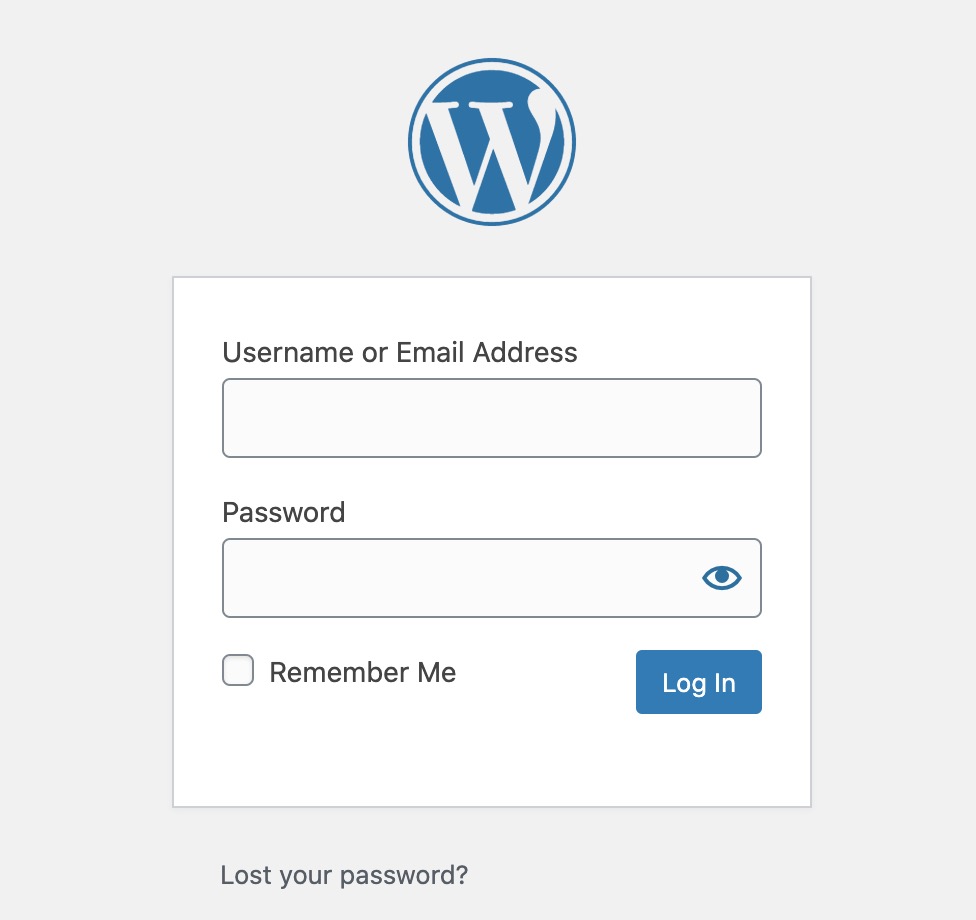
If you forgot your WordPress password you can use the “Forgot Password?” link on the WordPress login page. Using the forgot password button will email you a one-time use link to change your WordPress password.
Some security plugins will change your admin URL so if /wp-admin or /wp-login.php does not work we recommend disabling security plugins via FTP or asking your web host to do it.
If you see “Error: Cookies are blocked or not supported by your browser”, WordPress set a probe cookie called wordpress_test_cookie and your browser did not send it back. Work through these in order:
- Clear cookies for your own domain and try again. A stale or corrupted cookie from a previous session is the most common cause.
- Purge your caching plugin and any server cache. If a cached copy of the login page is being served, the probe cookie never gets set. This is the fix people miss most often, and it is the one WordPress’s own documentation calls out.
- Check your site address if you have just moved or migrated the site. A mismatch between the URL you are visiting and the one saved in Settings, typically www versus non-www or http versus https, means the cookie is set on one hostname and read on another.
- Confirm cookies are enabled at all in your browser. Private windows and strict privacy modes sometimes block them entirely.
One thing you can skip: third-party cookie settings. WordPress login cookies are first-party, set on your own domain, so blocking third-party cookies has no effect on this error.
A closely related but different message, “Cookies are blocked due to unexpected output”, means a plugin or theme printed something before WordPress could send the cookie headers. That one is a server-side problem rather than a browser one, and our error log explainer will usually name the file responsible.
To fix it, try clearing your browser’s cookies and cache, then logging in again. If that doesn’t work, check if your browser is blocking third-party cookies for the site. You may need to allow them. With a little troubleshooting, you can resolve pesky cookie-related login headaches.
When You Cannot Get In At All
Finding the URL is the easy half. These are the situations where the URL is right and you still cannot log in.
The login page reloads instead of logging you in
You enter correct details, the page refreshes, and you are back at the login form with no error. This is the login redirect loop, and it is almost always the same cookie problem described above: something is preventing the session cookie from sticking. Purge your cache first, then check that the site address in Settings → General matches the URL in your browser bar exactly, including www and https.
The reset email never arrives
Plenty of WordPress sites cannot send mail reliably, so “Forgot Password” is not always a way back in. If you have hosting access, you can set a new password directly.
With WP-CLI, which most decent hosts provide over SSH:
# find your user ID or login name
wp user list --fields=ID,user_login,user_email,roles

# set a new password for that user
wp user update 1 --user_pass="a-long-unique-password"
Our WP-CLI commands guide covers more of these. If you have no shell access, most hosts offer phpMyAdmin, where you can edit the user_pass field on the users table and set the format to MD5. WordPress detects the old hash format on next login and silently upgrades it.
A plugin or theme broke the site
If the login page is blank or throws a fatal error, you are not locked out so much as the site is down. Rename the offending plugin folder over SFTP to deactivate it, or rename the whole plugins folder to disable everything at once and get back in. Our guides to the white screen of death and reading a WordPress error walk through both.
Too many failed attempts
Security plugins lock out an IP address after repeated failures, and they will happily lock out the site owner. Most send an unlock email. Failing that, connect over SFTP and rename the security plugin’s folder in wp-content/plugins, log in, then rename it back and allowlist your own address.
Should You Change Your Login URL?
Moving the login page away from /wp-login.php is popular advice, and it is worth being clear about what it does and does not buy you.
It genuinely cuts noise. Automated bots hammer the default path constantly, and moving it makes most of that traffic miss, which shows up as fewer failed logins in your logs and slightly less load. What it does not do is make a weak password safe. Anyone targeting your site specifically can still find the login page, so treat this as tidying rather than defence.
The protections that actually matter are a strong unique password, two-factor authentication, and limiting login attempts. Our guide to securing your WordPress login covers those in order of how much they are worth.
One practical warning if you do change it: write the new URL down somewhere outside the site. If you later disable the plugin that moved the login page, the path reverts, and if you forget which plugin did it you can end up locked out of your own admin.
How to Remember Your WordPress Login URL
The easiest way to remember your WordPress login URL is to bookmark it in your web browser.
Here’s how to bookmark a page in most browsers:
- Google Chrome: Bookmarks > Bookmark This Tab
- Firefox: Bookmarks > Bookmark This Page
- Safari: Bookmarks > Add Bookmark
- Edge: Click the star icon to the right of the address bar
Once you bookmark the page in your browser you’ll have easy access to your admin in your browser’s bookmarks.
Add a login link with WordPress widgets:
Once you’re logged into your admin you can add a widget to your website that has a login link using the meta widget. This can be done by going to Appearance>widgets in your WordPress admin dashboard.
Once you’re in the widgets area of your WordPress site you can drag the Meta widget to your sidebar (or footer widget area) to include a WordPress login link.
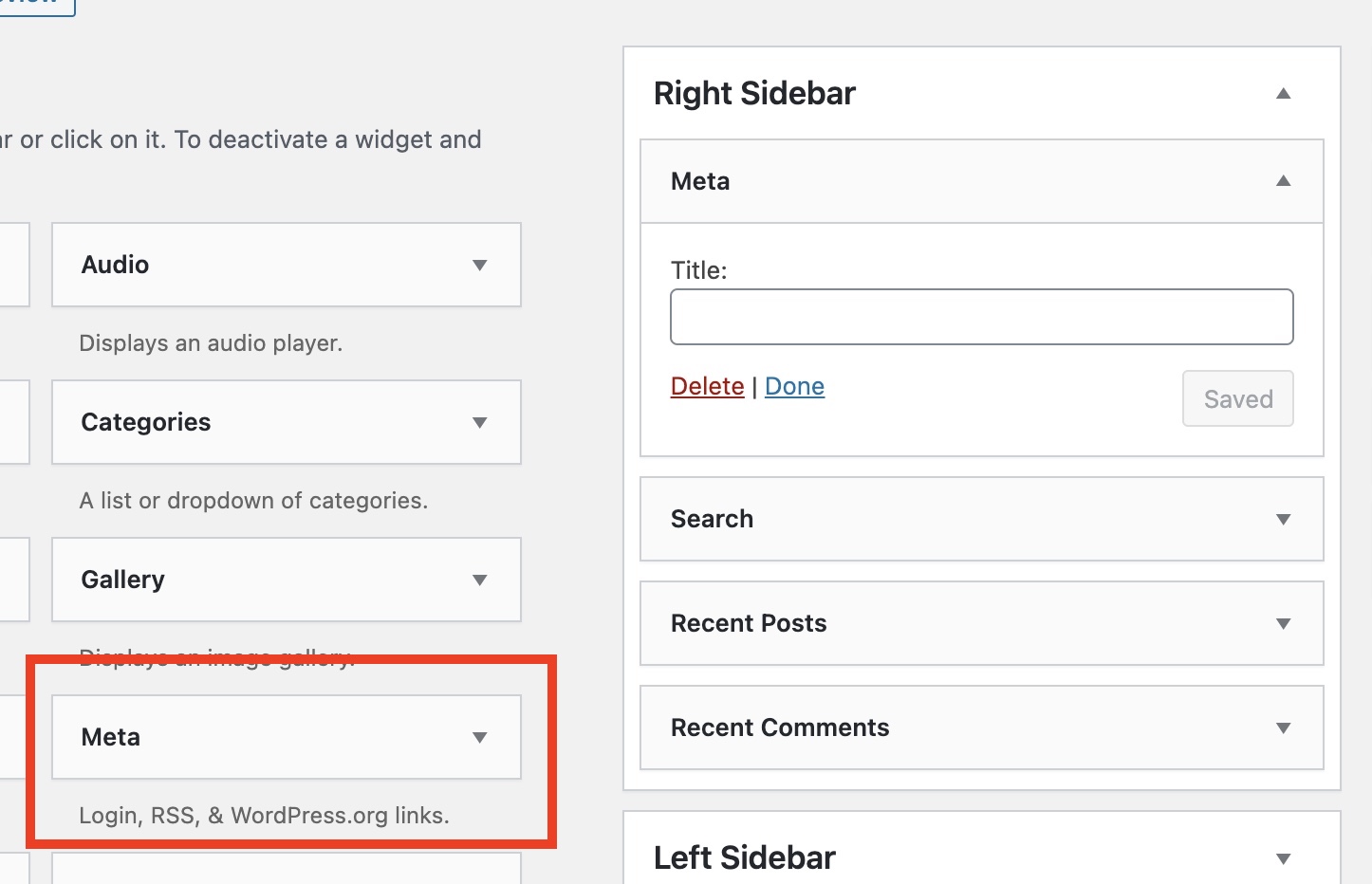
The Meta widget will include login, logout, RSS, and WordPress.org links.
Customizing your WordPress Login
We also have a few additional guides if you’re looking to modify your WordPress login more. Changing your WordPress login URL is a great way to improve your site’s security and to prevent bots from brute forcing your login page.
This includes changing the design of your WordPress login by customizing your login page. Additionally if you want to hide your WordPress login page you can follow our guide to changing your WordPress login URL. This can help prevent bots from finding your WordPress login page. For the part that actually protects it, see our guide to WordPress login security.
If you have any questions about your WordPress admin login you can ask it in the comments below!



7 Responses
I have used the same username for over 11 years with no problems. Today, it says it doesn't recognize my username. What's going on?
Maybe your site was hacked? you could try logging in with your email. If that doesn’t work your web host can look at the database
does this work for wp.org too or just wp.com?
i keep getting locked out of my own website but my admins still get in!
lol.
help!
I believe this would only be fore self-hosted WP.org sites. You should be able to login to WP.com by going to wordpress.com and viewing all your sites from there.
thanks a ton!
Happy to help!
Wow!!!
very helpful and valuable information for the learners.
Keep sharing..!!! loved it